Aehr Test Systems (AEHR): The AI Chip Testing Infrastructure Stock
Artificial intelligence infrastructure demand continues accelerating rapidly as hyperscalers and semiconductor companies race to develop faster and more powerful AI chips.
While companies like NVIDIA, AMD, and Broadcom dominate attention across the AI sector, several lesser-known infrastructure companies are also benefiting from the growing complexity of modern semiconductor manufacturing.
One area attracting increasing investor attention is semiconductor testing and reliability validation. As AI processors become more powerful and energy-intensive, ensuring long-term chip reliability is becoming increasingly important across AI data centers, high-performance computing systems, and advanced semiconductor platforms.
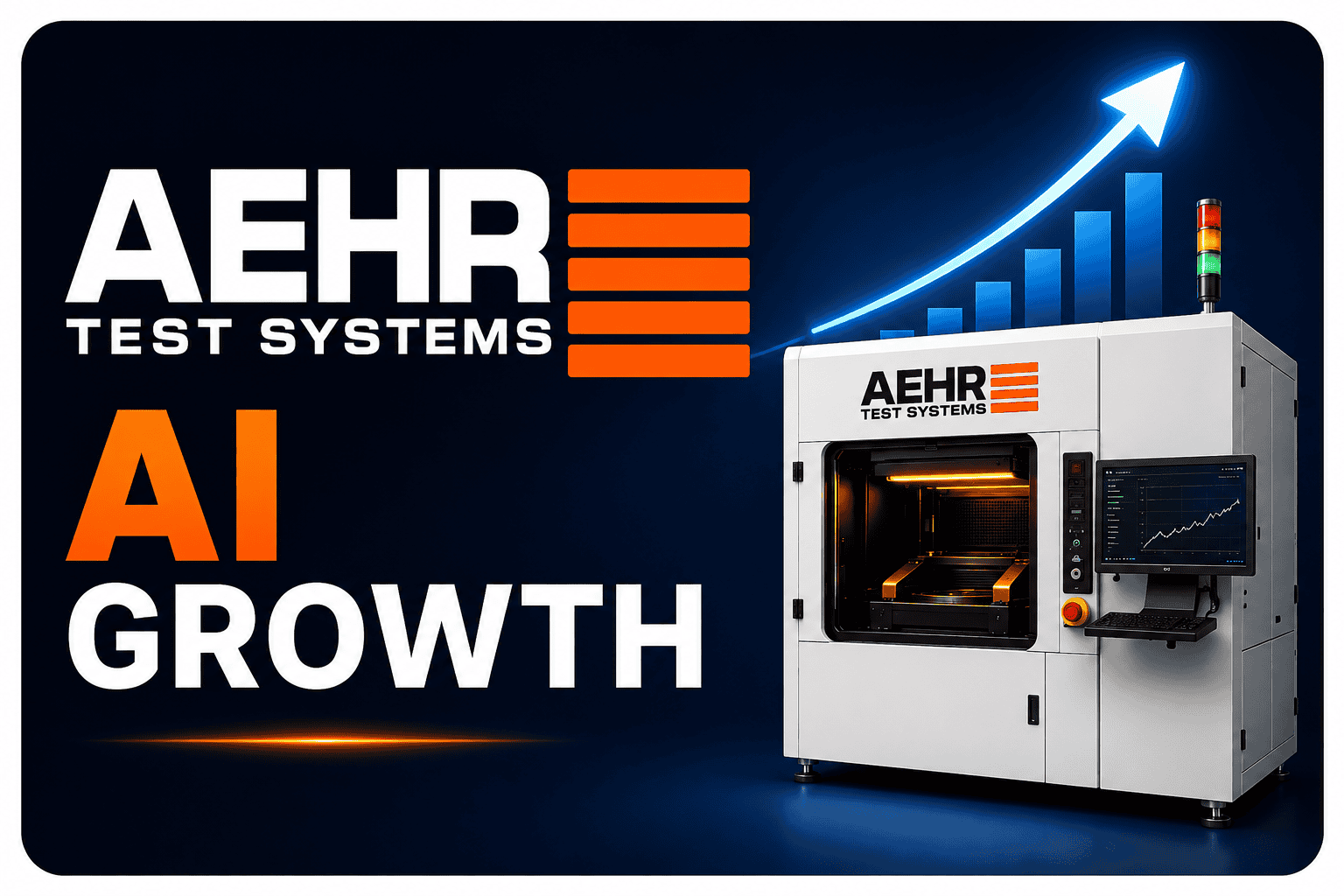
Aehr Test Systems (NASDAQ: AEHR) is one of the companies operating within this specialized part of the semiconductor ecosystem. More recently, investors increasingly started viewing semiconductor testing infrastructure as a potential secondary beneficiary of long-term AI infrastructure growth.
Disclaimer: This article is for informational purposes only and does not constitute financial advice. Always conduct your own research before making investment decisions.
Company Overview
Aehr Test Systems was founded in 1977 and focuses on semiconductor testing and reliability qualification equipment.
Historically, the company gained attention primarily through its exposure to silicon carbide semiconductor testing used in electric vehicles, industrial systems, and power management applications. Over time, Aehr expanded its technologies across several semiconductor markets requiring advanced reliability validation and stress testing.
More recently, investor attention shifted toward the company’s potential exposure to AI infrastructure and advanced semiconductor manufacturing as demand accelerated for:
- AI accelerators,
- high-performance processors,
- automotive semiconductors,
- and next-generation computing systems.
Today, Aehr operates within a specialized segment of the semiconductor industry focused on improving chip reliability, manufacturing quality, and performance validation before semiconductors are deployed into commercial systems.
What Does Aehr Test Systems Actually Do?
Aehr Test Systems develops equipment used to test semiconductor chips under extreme operating conditions before the chips are shipped to customers.
Modern semiconductors must operate reliably under:
- high temperatures,
- electrical stress,
- heavy workloads,
- and continuous processing demands.
This becomes especially important for AI chips, automotive systems, and high-performance computing environments where semiconductor failures can become extremely costly.
Aehr’s core technology focuses on:
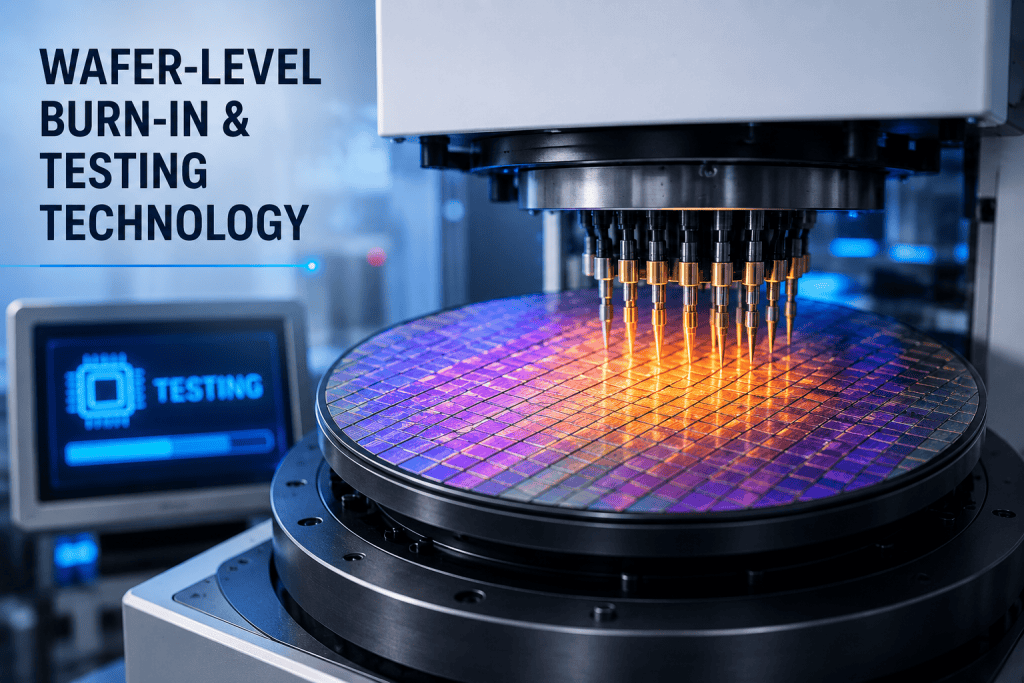
wafer-level burn-in and semiconductor reliability testing
The company’s systems help manufacturers identify defective or weak chips early in the production process by stress-testing semiconductors before final deployment.
Unlike traditional testing methods that often test chips individually after packaging, Aehr’s wafer-level approach allows many chips to be tested simultaneously while still on the semiconductor wafer. This can improve manufacturing efficiency and help reduce costs.
The company’s technologies are used across several semiconductor markets including:
- AI processors,
- silicon carbide semiconductors,
- automotive chips,
- power management systems,
- and high-performance computing infrastructure.
As semiconductor complexity continues increasing, testing and reliability validation are becoming more important across the broader semiconductor manufacturing ecosystem.
Financial Performance
Aehr Test Systems’ financial performance over the past several years reflects both the volatility of the semiconductor industry and the company’s growing exposure to high-performance semiconductor markets.
The company experienced strong growth during 2023 and 2024 as demand accelerated for silicon carbide semiconductor testing used in electric vehicles and industrial power systems. More recently, investor attention increasingly shifted toward the company’s potential exposure to AI infrastructure and advanced semiconductor manufacturing.
Like many smaller semiconductor infrastructure companies, Aehr’s revenue can fluctuate significantly depending on customer orders, semiconductor production cycles, and broader industry spending trends. However, the company remained profitable during several recent periods while maintaining a relatively strong balance sheet compared to many smaller-cap technology companies.
| Year | Revenue | Net Income | Diluted EPS | Key Commentary |
|---|---|---|---|---|
| 2026 | Growth Stabilization | Profitability Pressured | Watching AI Demand | AI semiconductor testing demand becoming major investor focus |
| 2025 | ~$66M | ~$3M–$5M | Positive EPS | Semiconductor demand normalization phase |
| 2024 | ~$75M | ~$18M+ | Strong Profitability | Strong silicon carbide semiconductor demand |
| 2023 | ~$65M | ~$13M+ | Major Improvement | Rapid growth across semiconductor infrastructure markets |
During 2024, Aehr benefited from strong demand tied to silicon carbide semiconductor testing and broader semiconductor infrastructure spending. However, more recently, investors closely watched whether AI-related semiconductor testing demand could become an additional long-term growth driver for the company.
Semiconductor Testing Market And Competitors
Aehr Test Systems operates within the broader semiconductor testing and semiconductor equipment industry alongside several much larger companies supplying testing, reliability validation, and semiconductor manufacturing infrastructure systems to global chip manufacturers.
Compared to many of its competitors, Aehr remains a relatively small semiconductor infrastructure company by both revenue scale and market capitalization. However, smaller semiconductor equipment companies can sometimes experience significantly higher volatility and faster growth cycles when investor demand accelerates around emerging semiconductor themes such as AI infrastructure.
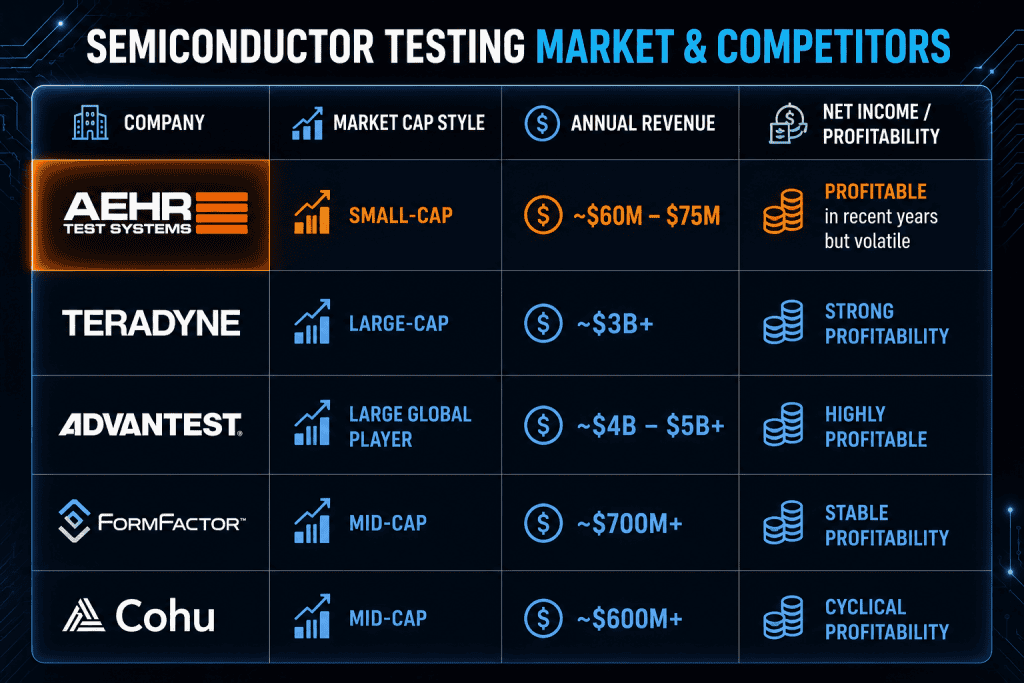
Unlike larger semiconductor equipment companies that operate across multiple semiconductor manufacturing categories, Aehr remains more concentrated within specialized semiconductor testing markets. This creates both higher risk and potentially higher upside if demand accelerates across advanced semiconductor and AI infrastructure markets.
Because of its much smaller revenue base and market capitalization, even relatively modest increases in customer demand or large semiconductor orders can have a more significant impact on Aehr’s financial performance compared to larger semiconductor equipment companies.
Analyst Ratings
Wall Street sentiment toward Aehr Test Systems improved significantly during 2026 as investor attention accelerated around AI semiconductor infrastructure and hyperscale AI processor demand.
Several analysts turned more bullish following multiple AI-related semiconductor testing orders tied to hyperscale customers and advanced AI processors. However, analysts remain somewhat divided because of the stock’s extremely large rally during 2026 and the company’s relatively small revenue base compared to larger semiconductor equipment firms.
| nalyst Rating | Approx. Number Of Analysts |
|---|---|
| Buy / Strong Buy | ~7–8 Analysts |
| Hold | ~0–3 Analysts |
| Sell | Near Zero |
| Consensus Rating | Moderate Buy / Buy |
Analyst Price Targets
Despite the bullish AI infrastructure narrative surrounding AEHR, analyst price targets remain mixed due to concerns about valuation following the stock’s massive rally during 2026.
| Metric | Estimate |
|---|---|
| Stock Price (May 22, 2026) | ~$95–$106 |
| Median Price Target | ~$63–$68 |
| Highest Price Target | ~$68–$71 |
| Lowest Price Target | ~$56 |
| Analyst View | Bullish long-term but cautious near-term valuation |
Interestingly, several analyst price targets remain below the stock’s recent trading levels. This reflects concerns that the market may already be pricing in a substantial amount of future AI-related growth optimism.
At the same time, bullish investors argue that continued AI semiconductor demand, hyperscale AI infrastructure expansion, and additional large customer orders could potentially justify higher long-term valuations if growth accelerates further.
Key Growth Drivers
Unlike many speculative AI-related companies, Aehr’s recent growth narrative is tied to actual production orders and expanding demand across semiconductor infrastructure markets.
One of the biggest developments came in April 2026 when Aehr announced a record $41 million production order from a lead hyperscale AI customer for package-level burn-in of custom AI processor ASICs. The order represented the largest in the company’s history and pushed second-half bookings above $92 million.
This matters because it validates that Aehr’s testing platforms are increasingly being used in:
- AI processors,
- hyperscale AI infrastructure,
- optical interconnect systems,
- and high-power semiconductor environments.
Another major growth area involves silicon photonics. In March 2026, Aehr announced a new silicon photonics customer tied to hyperscale AI and cloud data center optical interconnect markets. The systems are designed for wafer-level burn-in and qualification of optical communication chips used in next-generation AI networking infrastructure.
This is important because many industry experts increasingly believe optical networking and silicon photonics could become critical technologies as AI clusters grow larger and require significantly faster data movement between GPUs and servers.
Several additional factors are also driving investor interest:
- expanding AI processor complexity,
- increasing thermal and power requirements,
- growing semiconductor reliability requirements,
- rising hyperscale AI spending,
- and demand for advanced semiconductor packaging validation.
Importantly, Aehr is still relatively small compared to larger semiconductor equipment companies. Because of its smaller revenue base, even a handful of large AI-related orders can materially impact future revenue growth and investor expectations.
Risks And Challenges
Despite the growing excitement surrounding AEHR’s AI-related opportunities, the company still faces several important risks that investors should closely monitor.
Customer Concentration Risk
One of the biggest risks for Aehr is its dependence on a relatively small number of customers and large orders.
Unlike larger semiconductor equipment companies with diversified revenue streams, AEHR’s financial performance can be heavily influenced by only a few hyperscale or semiconductor customers. For example, the company’s recent AI momentum was significantly boosted by a record $41 million hyperscale AI-related order announced during 2026. While the order validated Aehr’s AI infrastructure exposure, it also demonstrated how dependent near-term growth can become on a limited number of major projects.
Revenue Volatility
Because AEHR operates at a relatively small scale, quarterly revenue and profitability can fluctuate significantly depending on customer order timing, qualification cycles, and semiconductor production schedules.
A delayed hyperscale deployment or postponed semiconductor testing program could materially impact quarterly financial results. This creates far higher earnings volatility compared to larger semiconductor equipment companies generating billions in recurring revenue annually.
Competitive Pressure
AEHR also competes against much larger semiconductor testing companies including Teradyne and Advantest. These larger competitors possess:
- stronger balance sheets,
- larger customer relationships,
- broader product portfolios,
- and significantly greater manufacturing scale.
If larger semiconductor testing firms aggressively expand into specialized AI reliability testing and wafer-level burn-in markets, competitive pressure on smaller companies like AEHR could increase over time.
Conclusion
Aehr Test Systems represents a very different type of AI infrastructure company compared to well-known names like NVIDIA, AMD, or Broadcom.
Rather than building AI chips directly, AEHR operates within the semiconductor testing and reliability layer of the semiconductor ecosystem — an area becoming increasingly important as AI processors grow more complex, power-intensive, and expensive to manufacture.
More recently, investor attention toward the company accelerated following several large AI-related semiconductor testing orders tied to hyperscale infrastructure customers. These developments helped strengthen the view that semiconductor reliability testing could become an increasingly important part of next-generation AI infrastructure deployment.
At the same time, AEHR remains a smaller and higher-risk semiconductor infrastructure company compared to larger industry competitors. Revenue volatility, customer concentration, semiconductor industry cycles, and elevated valuation expectations continue creating meaningful risks for investors.
However, because of its relatively small revenue base and market capitalization, continued expansion across AI semiconductor testing and hyperscale infrastructure markets could potentially have an outsized impact on the company’s future growth trajectory.
Ultimately, AEHR represents a higher-risk, higher-volatility AI infrastructure story focused on one of the less-discussed areas of the AI ecosystem.