AI Layoffs in 2026: What Companies Are Saying vs What’s Really Happening
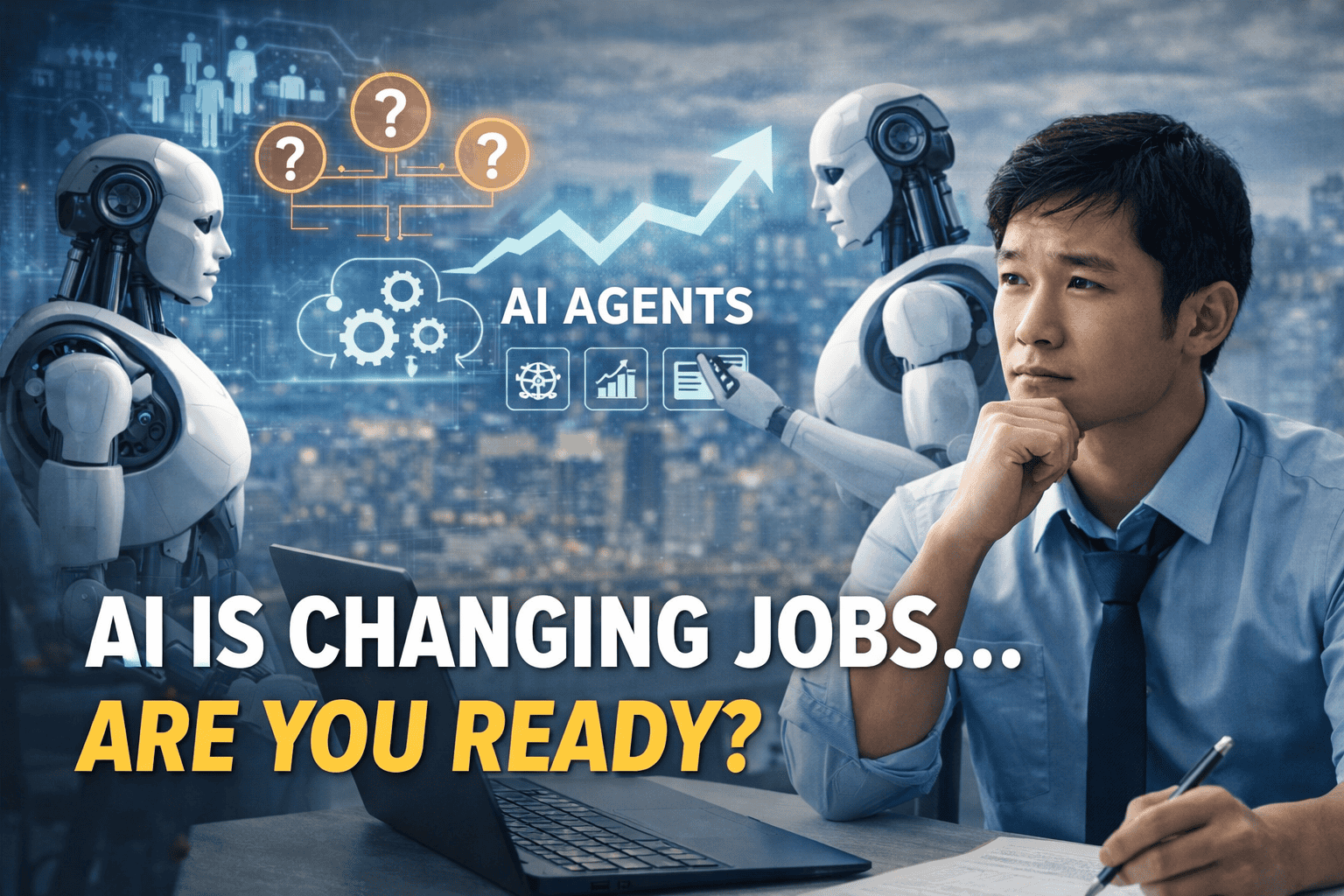
Artificial intelligence is no longer just a future disruptor — it is actively reshaping the job market today.
In 2026, companies across industries are announcing layoffs while simultaneously increasing investments in AI. From technology firms to financial institutions and media companies, workforce reductions are increasingly being linked to automation, efficiency, and AI-driven transformation.
But the reality is more complex than the simple narrative that “AI is replacing jobs.” What is happening is a structural shift in how companies operate, allocate resources, and define the future of work.
A Growing Wave of AI-Driven Layoffs
The scale of layoffs in 2026 reflects a broader transition already underway. Reports across major business outlets indicate tens of thousands of job cuts globally within just the first few months of the year. A meaningful portion of these layoffs is being associated with automation and AI initiatives.
What stands out is not just the number of layoffs, but the intent behind them. Companies are not only reducing costs — they are actively redirecting capital toward AI infrastructure, machine learning capabilities, and automation tools. In many cases, layoffs and AI investments are happening at the same time, suggesting a deliberate reallocation rather than a reaction to weak demand.
What Companies Are Actually Saying
Large technology companies have been among the most visible participants in this shift. Coverage from publications like the Wall Street Journal and Reuters highlights a consistent pattern: organizations are restructuring their workforce while increasing AI spending.
Instead of framing layoffs purely as cost-cutting measures, many companies are positioning them as part of a broader transformation strategy. Traditional roles are being reduced while new investments are directed toward AI development, data infrastructure, and automation systems.
In some cases, company leadership has been more direct. Executives have acknowledged that certain roles no longer align with their long-term AI strategy. This marks a shift in messaging — from temporary efficiency measures to a more permanent realignment of workforce needs.
Software and SaaS Companies Under Pressure
The impact of AI is particularly visible in software and SaaS companies. These businesses, which once relied on large teams for support, operations, and incremental development, are now under pressure to operate more efficiently.
AI tools are enabling automation in areas such as customer support, code generation, and internal workflows. As a result, companies are beginning to rethink team structures and reduce reliance on roles that can be partially or fully automated.
This does not mean software companies are shrinking overall. In many cases, they are shifting hiring toward AI-focused roles while reducing positions that are less aligned with the new direction. The result is a more concentrated workforce built around fewer, more specialized functions.
Media and Content Industry: A Quiet Transformation
The media industry is also undergoing significant change, although it is often less explicitly labeled as AI-driven.
News organizations and digital media companies are restructuring operations while adopting AI tools for content generation, editing, and distribution. While layoffs in this sector are sometimes attributed to broader digital transformation, AI is increasingly part of that story.
The shift is subtle but important. Content workflows are becoming more automated, and fewer resources are required to produce and distribute information at scale. This is gradually reshaping the workforce behind the scenes.
What Analysts and Research Firms Are Saying
Financial institutions and research firms are beginning to frame AI as a long-term structural force in the labor market. Estimates from major banks suggest that AI could impact hundreds of millions of jobs globally over time, although the timeline and magnitude remain uncertain.
At the same time, analysts caution against oversimplifying the narrative. Not every layoff is directly caused by AI. In many cases, companies are responding to a combination of factors, including cost pressures, market conditions, and the need to improve efficiency.
What AI is doing, however, is accelerating these decisions. It provides both the tools and the justification for companies to move faster in restructuring their workforce.
Is AI Replacing Jobs — Or Reshaping Them?
The data suggests that AI is not simply eliminating jobs but transforming them.
Roles that involve repetitive, rule-based tasks are becoming increasingly vulnerable to automation. At the same time, demand is growing for positions related to AI development, data science, and infrastructure.
This creates a shift rather than a collapse. Jobs are moving from one category to another, requiring different skills and capabilities. The challenge for workers is not just job availability, but adaptability.
The “AI Justification” Debate
An interesting debate has emerged around whether AI is always the true cause of layoffs. Some experts argue that companies may be using AI as a narrative to explain decisions that are fundamentally driven by cost optimization or strategic repositioning.
In this view, AI is not always the root cause, but it acts as a catalyst. It allows companies to justify changes that might have been necessary regardless of technological advancements.
This perspective adds an important layer of nuance. AI is both a real driver of change and a strategic lens through which companies communicate that change.
What This Means for Job Seekers
For job seekers, the implications are significant and immediate.
The nature of work is changing quickly, and traditional career paths are becoming less predictable. Skills related to AI, automation, and data are increasingly valuable, even in roles that are not directly technical.
Competition in the job market is also intensifying, as layoffs increase the number of candidates while companies become more selective in hiring.
Most importantly, resumes and job applications need to evolve. Employers are looking for candidates who can demonstrate adaptability, measurable impact, and familiarity with modern tools, including AI.
Final Take
AI-driven layoffs in 2026 are real, but they are not as simple as machines replacing humans.
What we are seeing is a broader transformation in how companies operate. Organizations are becoming more efficient, more focused, and more reliant on technology. AI is accelerating this shift, but it is not acting alone.
The real story is not job loss — it is job transformation.
Optimize Your Resume for the AI Era
If you’re applying for jobs in this evolving market, your resume needs to reflect these changes.
ResumeGauge helps you identify skill gaps, align your resume with job descriptions, and position yourself effectively in an AI-driven hiring environment.