Arista Networks Stock Report 2026: AI Growth and ANET Risks
Key Takeaway
Arista’s AI-networking position gained momentum after its first $3 billion quarter. Revenue, margins, and Q3 guidance all improved. However, the investment debate remains demanding. Investors must decide whether hyperscale AI spending, product leadership, and software differentiation can offset concentrated demand, supply-chain exposure, and high expectations.
Introduction and central investment question
Arista sells high-performance networking systems and software for cloud, AI, data-center, campus, and routing environments. Its latest quarter showed broad demand and stronger profitability. The central question is whether that growth can persist as AI clusters require ever-faster networking.
The bull case rests on Arista becoming a key supplier of Ethernet-based AI fabrics. The bear case centers on concentrated large customers, hardware cycles, and intense competition. Therefore, investors should separate reported execution from the assumptions embedded in future growth expectations.
Investor disclaimer
This article is educational, informational research—not financial advice.
We strive to keep data accurate, but unavoidable errors or omissions may occur. Verify important information with primary sources.
Company overview
Arista Networks is a networking company listed on the New York Stock Exchange as ANET. It builds switches, routing platforms, network operating software, and cloud-management tools. Its customers span large cloud providers, enterprises, campuses, and service providers.
The company describes its platform as client-to-cloud networking. That scope matters because it connects AI data centers with traditional cloud and enterprise opportunities. Arista also expanded its portfolio through the VeloCloud SD-WAN acquisition from Broadcom in 2025.
How the company makes money
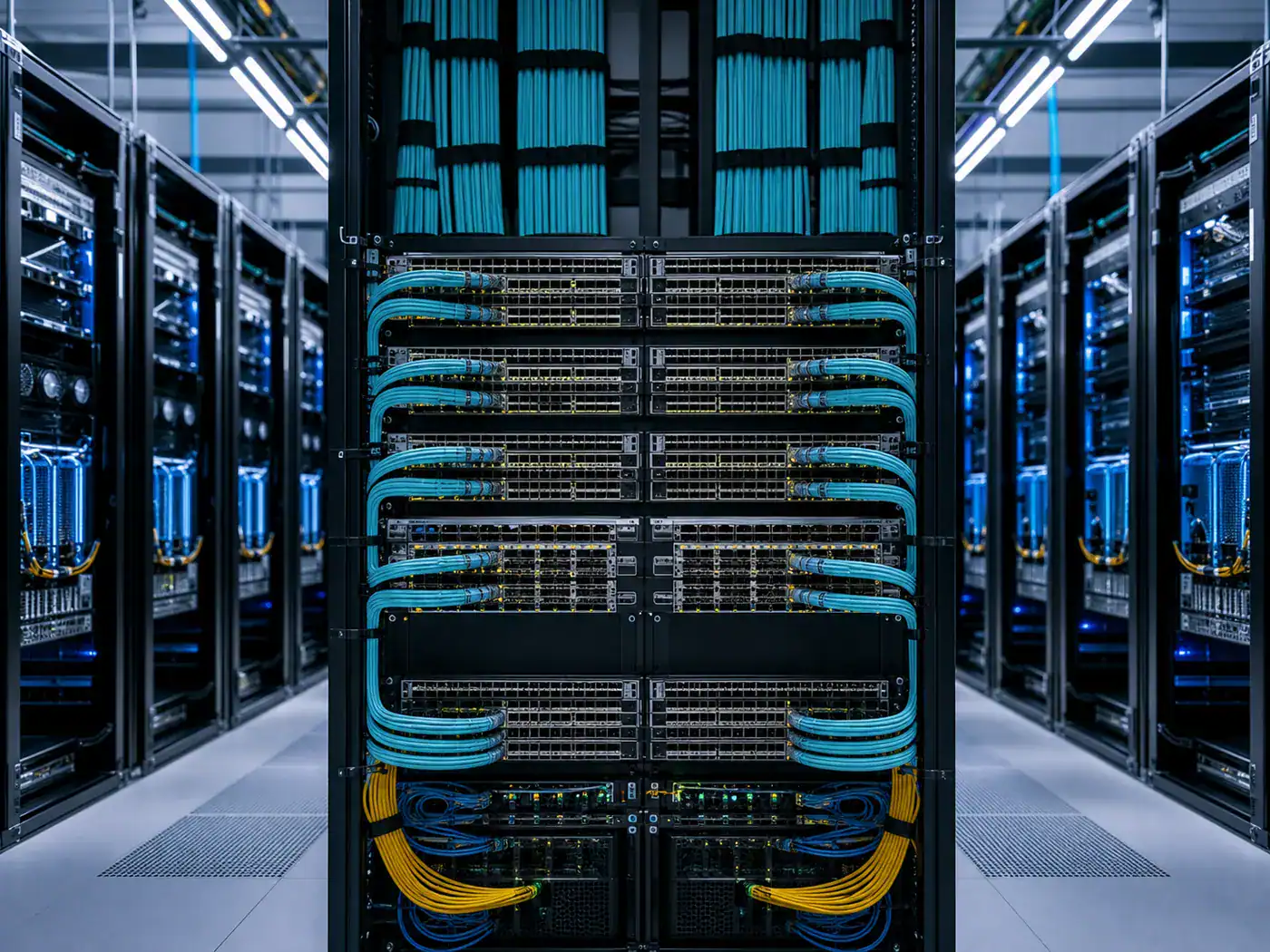
Arista earns most revenue from product sales, including switching and routing platforms. It also earns service revenue from support, maintenance, and subscriptions. Product revenue therefore drives the majority of quarterly movement, while services can add recurring customer relationships.
The model depends on successful platform transitions. Customers must adopt higher-speed systems as their workloads expand. Consequently, new switch capacity, optics, software features, and support can all contribute to an AI data-center deployment.
Why the company matters to AI
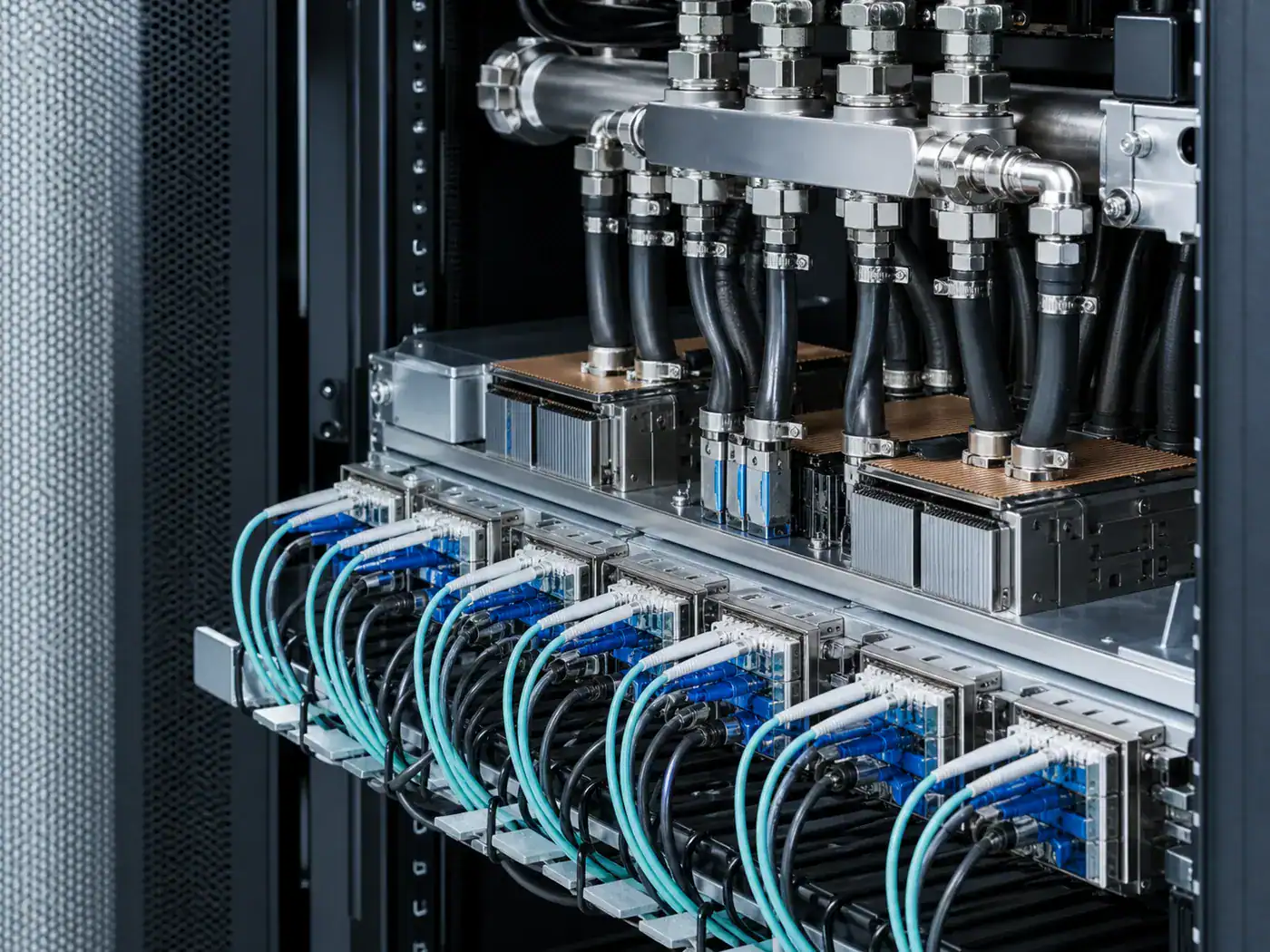
AI clusters move very large volumes of data between accelerators, servers, and storage. Networking quality can affect training time, utilization, and reliability. Arista positions Ethernet fabrics as an open approach for those scale-out and scale-up workloads.
Its 7060XE7 portfolio targets rack-scale AI infrastructure with 1.6-terabit interfaces. Arista says the systems can reach 100 Tbps of bandwidth and support lower-power optics. Those claims show product direction, not a guarantee of customer adoption or future revenue.
Recent business developments
On August 4, 2026, Arista reported its first $3 billion revenue quarter. Q2 revenue reached $3.036 billion, up 12.1% sequentially and 37.7% year over year. GAAP operating margin reached 45.4%, while non-GAAP operating margin reached 49.9%.
The company also introduced 1.6T AI-fabric platforms and advanced liquid-cooled optical designs. Arista named Meta, Microsoft, Oracle, AMD, and Broadcom in product and ecosystem discussions. These relationships support strategic relevance, but the company did not disclose contract values, order volumes, or revenue timing.
For Q3 2026, management guided to about $3.3 billion of revenue. It also guided to a 48% to 49% non-GAAP operating margin and $1.06 to $1.08 in non-GAAP diluted EPS. Guidance remains a forecast, not a reported result.
Financial performance and revenue trend
Arista has delivered three consecutive years of expansion in revenue, earnings, and operating cash flow. The figures below are reported annual GAAP amounts. Capital expenditures are cash purchases of property and equipment, not an estimate of total AI infrastructure spending.
| Fiscal year | Revenue | GAAP net income | Operating cash flow | Capital expenditures |
|---|---|---|---|---|
| 2025 | $9.006B | $3.511B | $4.372B | $119.5M |
| 2024 | $7.001B | $2.852B | $3.708B | $32.0M |
| 2023 | $5.860B | $2.087B | $2.034B | $34.4M |
Q2 added evidence of acceleration. Revenue grew 37.7% year over year, and GAAP diluted EPS rose to $0.95 from $0.70. Q1 revenue had already grown 35.1%, which means the first half started from a strong base.
Growth drivers
AI clusters require more bandwidth, lower latency, congestion control, and resilient fabrics. Arista’s AI-networking thesis therefore spans switches, optics, EOS software, and operational telemetry. Faster interfaces may raise system value, although they also require customers to refresh infrastructure.
The company also pursues campus, routing, and security-adjacent markets. Those markets may diversify growth beyond cloud titans. Still, large AI deployments remain the clearest near-term driver of incremental network capacity.
Product execution is another driver. The 7060XE7 and XPO optics initiatives address density, power, and cooling constraints. Their commercial contribution remains unproven because availability occurs over future quarters.
Customers, contracts, and partnerships
Arista’s product releases reference large cloud and AI customers, including Meta, Microsoft, and Oracle. Such references show that the company works within demanding infrastructure environments. They do not establish a disclosed purchase commitment or a guaranteed revenue backlog.
Arista also works with AMD and Broadcom on networking ecosystems. Open Ethernet standards may widen customer choice and help adoption. Conversely, common standards can increase competitive pressure and reduce differentiation over time.
The company warns that a limited number of customers can represent substantial purchases. That risk matters because delayed deployments can affect quarter-to-quarter results. Investors should monitor revenue conversion and customer diversification, rather than infer sales from product announcements.
Competitive position
Arista combines high-speed switching hardware with EOS software and cloud-management tools. This integrated approach can make deployments easier to operate across large environments. It also gives Arista a way to compete on more than raw port speed.
The company faces established networking vendors, merchant-silicon ecosystem shifts, and customer-built alternatives. AI networking remains technically demanding, but rapid product cycles can change competitive advantage quickly. Arista’s position depends on continued performance, reliability, power efficiency, and software execution.
Valuation
Valuation requires caution because high growth can make simple historical multiples less informative. The latest pre-results market snapshot in this research showed ANET at $169.71 on July 28, 2026. That price predates the August 4 earnings release and should not be treated as a current quote.
At that snapshot, third-party consensus targets averaged above the stated price. Those targets are forecasts, not company-reported facts. They can change sharply after earnings, interest-rate moves, or revisions to AI infrastructure spending assumptions.

Market expectations
The following third-party consensus snapshot comes from StockAnalysis.com, using S&P Global data, as of July 28, 2026. It predates Q2 results. Ratings and targets are changing estimates, not investment instructions or company guidance.
| Rating | Analyst count |
|---|---|
| Buy / Strong Buy | 29 |
| Hold | 1 |
| Sell | 0 |
| Measure | Value |
|---|---|
| Current price, July 28, 2026 | $169.71 |
| Lowest price target | $164.00 |
| Consensus price target | $192.31 |
| Highest price target | $220.00 |
Risks
Large-customer concentration can magnify the effect of a delayed or reduced deployment. Arista also relies on a predominant merchant-silicon vendor and third-party manufacturers. Component availability, pricing, and lead times may therefore affect results.
Technology risk is equally important. Customers may select competing architectures, build internal alternatives, or slow capital spending. Export controls, tariffs, cyber incidents, and lower network-equipment prices can also pressure demand or margins.
Finally, Q3 guidance must convert into reported performance. A strong guide can still face execution, supply, or customer-timing changes. Investors should weigh the company’s forward-looking statements against its disclosed risks.
Bull case
Arista’s recent execution supports the bullish view. Q2 revenue grew 37.7%, GAAP operating margin reached 45.4%, and management guided to another sequential revenue increase. The company has also produced strong annual operating cash flow while expanding AI-focused products.
The product roadmap targets real constraints in AI clusters, including bandwidth, power, cooling, and congestion. Arista’s relationships across cloud and semiconductor ecosystems may improve product relevance. If Ethernet fabrics gain share in AI deployments, Arista could benefit from higher content per customer deployment.
Bear case
The bearish view focuses on durability and concentration. AI infrastructure spending can be large, lumpy, and dependent on a small number of buyers. A demand pause or architecture change could affect results faster than a diversified software model would.
Competition also remains strong. Hardware transitions can require substantial investment, and lower pricing could pressure gross margin. Finally, consensus expectations were already constructive before Q2, which leaves less room for execution missteps.
Investment scorecard
| Dimension | Editorial assessment | Evidence and limitation |
|---|---|---|
| AI relevance | High | AI fabrics are central to the product roadmap, but AI revenue is not separately disclosed. |
| Financial execution | High | Q2 growth and margins were strong; future guidance needs conversion. |
| Cash generation | High | Operating cash flow rose across the last three completed fiscal years. |
| Customer diversification | Medium | Enterprise expansion helps, yet large customer purchases remain a disclosed risk. |
| Valuation confidence | Medium-low | Third-party targets were positive but predated Q2 and can change quickly. |
| Overall risk | Medium-high | Hardware cycles, concentration, supply dependence, and competition remain material. |
Final outlook
Arista enters the next quarter with clear momentum. Its reported results, AI-fabric roadmap, and Q3 outlook support the view that networking has become a critical AI infrastructure layer. The company also combines that growth with unusually high operating margins and cash generation.
The next test is durability. Investors should watch customer concentration, product adoption, supply constraints, and the conversion of Q3 guidance into revenue. Arista’s opportunity is meaningful, but the stock-report case depends on sustained execution rather than AI enthusiasm alone.
FAQ
What did Arista report for Q2 2026?
Arista reported $3.036 billion in revenue, up 37.7% year over year. It reported GAAP diluted EPS of $0.95 and non-GAAP diluted EPS of $1.02.
Why is Arista relevant to AI infrastructure?
AI clusters require high-bandwidth networking among accelerators, servers, and storage. Arista sells Ethernet switches, optics, EOS software, and management tools designed for those fabrics.
What is Arista’s Q3 2026 guidance?
Management guided to roughly $3.3 billion of revenue. It also guided to a 48% to 49% non-GAAP operating margin and $1.06 to $1.08 in non-GAAP diluted EPS.
What are the main risks for ANET?
The main risks include large customer purchases, technology transitions, merchant-silicon and manufacturing dependence, component constraints, competition, and AI infrastructure spending volatility.
Does Arista disclose standalone AI revenue?
No. The company discusses AI networking and related products, but it does not report a standalone AI revenue line in the cited results.